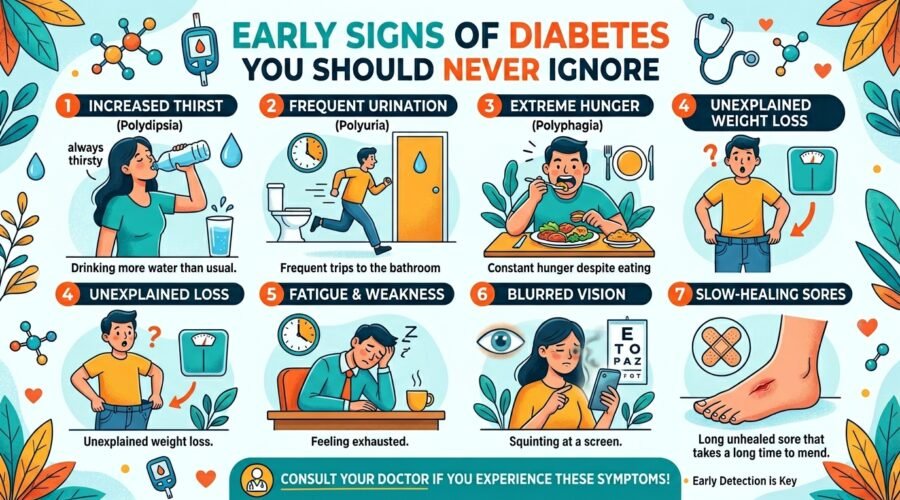
Diabetes doesn’t show up overnight. It creeps in quietly — and that’s exactly what makes it dangerous. Recognizing the early signs of diabetes can genuinely change the course of your health. Millions of people are walking around right now with prediabetes and have no idea. Let’s change that.
What Is Diabetes, Really?
Diabetes is a condition where your body either doesn’t produce enough insulin or can’t use it effectively. Insulin is the hormone that allows glucose (sugar) from your food to enter your cells for energy.
There are two main types:
- Type 1 Diabetes — an autoimmune condition where the pancreas produces little to no insulin. Usually diagnosed in childhood or young adulthood.
- Type 2 Diabetes — the most common form, where the body becomes resistant to insulin over time. Strongly linked to lifestyle factors.
According to the International Diabetes Federation (IDF) 2025 Atlas, approximately 590 million adults worldwide are living with diabetes — and nearly half remain undiagnosed.
That’s a staggering number.
Why Early Detection Matters So Much
Here’s the thing — Type 2 diabetes is largely preventable, especially when caught in the prediabetes stage. The CDC confirms that losing a modest amount of weight (5–7% of body weight) and increasing physical activity can prevent or delay Type 2 diabetes in high-risk individuals.
But you can only act on that if you know what to look for.
10 Early Warning Signs of Diabetes
1. Frequent Urination (Polyuria)
When blood sugar levels are high, your kidneys work overtime to filter and absorb the excess glucose. When they can’t keep up, the extra sugar is excreted through urine — taking a lot of fluid with it.
You might notice you’re waking up multiple times at night to use the bathroom. That’s a red flag worth taking seriously.
2. Excessive Thirst (Polydipsia)
Frequent urination leads to dehydration. Your body signals you to drink more. This creates a frustrating cycle — you drink, you urinate, you’re thirsty again.
If you’re drinking significantly more water than usual and still feeling thirsty, don’t brush it off.
3. Unexplained Fatigue
Glucose is your body’s primary energy source. When your cells can’t absorb it properly, you feel exhausted — even after a full night’s sleep. This type of fatigue is different from normal tiredness. It’s a deep, persistent lack of energy that doesn’t go away with rest.
4. Blurred Vision
High blood sugar causes fluid to shift in and out of the lens of your eye, affecting its ability to focus. This can lead to blurry or fluctuating vision.
Don’t assume new glasses will fix this until you’ve ruled out blood sugar issues.
5. Slow-Healing Wounds and Cuts
High blood glucose impairs circulation and damages nerve function over time. This slows your body’s ability to heal even minor cuts or bruises. A small wound that takes weeks to heal deserves medical attention.
6. Tingling or Numbness in Hands and Feet
This is a sign of early diabetic neuropathy — nerve damage caused by prolonged high blood sugar. You might feel a pins-and-needles sensation, especially in your feet and lower legs.
7. Increased Hunger (Polyphagia)
Even after eating, people with diabetes may feel constantly hungry. Because glucose isn’t entering the cells effectively, your body keeps signaling for more fuel — even though you’ve just eaten.
8. Unexplained Weight Loss
This one seems counterintuitive. But in Type 1 diabetes especially, the body starts breaking down fat and muscle for energy since it can’t use glucose properly. Rapid, unexplained weight loss without dietary changes is always worth investigating.
9. Frequent Infections
High blood sugar creates an environment where bacteria and fungi thrive. People with undiagnosed diabetes often experience recurring urinary tract infections, yeast infections, or skin infections.
10. Dark Skin Patches (Acanthosis Nigricans)
Dark, velvety patches of skin — usually around the neck, armpits, or groin — can signal insulin resistance. This is a very underrecognized early warning sign of Type 2 diabetes.
Symptoms Comparison: Type 1 vs Type 2 Diabetes
| Symptom | Type 1 Diabetes | Type 2 Diabetes |
|---|---|---|
| Onset | Rapid (days to weeks) | Gradual (months to years) |
| Weight change | Often weight loss | Often overweight/obese |
| Age of onset | Usually younger | Usually adults (but rising in youth) |
| Thirst/urination | Severe | Mild to moderate |
| Fatigue | Severe | Moderate |
| Insulin dependency | Always | Not always initially |
Risk Factors You Should Know
Some people are at higher risk and should get tested even if they don’t have obvious symptoms:
- Family history of diabetes
- Being overweight, especially with abdominal fat
- Physical inactivity
- Age 45 or older
- History of gestational diabetes
- Polycystic ovary syndrome (PCOS)
- High blood pressure or high cholesterol
The American Diabetes Association recommends screening for Type 2 diabetes in adults starting at age 35, or earlier if risk factors are present.
What to Do If You Notice These Signs
Don’t panic — but do act. Start by seeing your primary care doctor. They’ll likely order:
- Fasting blood glucose test — measures blood sugar after an 8-hour fast
- HbA1c test — gives an average blood sugar level over 2–3 months
- Oral glucose tolerance test — measures how your body processes sugar
Understanding your numbers is the first step.
| Blood Glucose Level | Category |
|---|---|
| Fasting < 100 mg/dL | Normal |
| Fasting 100–125 mg/dL | Prediabetes |
| Fasting ≥ 126 mg/dL (on two tests) | Diabetes |
| HbA1c < 5.7% | Normal |
| HbA1c 5.7–6.4% | Prediabetes |
| HbA1c ≥ 6.5% | Diabetes |
Can You Reverse Early-Stage Diabetes?
Prediabetes can often be reversed through:
- Weight loss (even 5–10% of body weight)
- Regular physical activity
- Dietary changes — reducing refined carbs and sugar
- Better sleep and stress management
Type 2 diabetes, once fully developed, can sometimes be put into remission with significant lifestyle changes, particularly weight loss. A landmark clinical trial — the DiRECT Trial — showed that nearly half of Type 2 diabetes patients achieved remission through a structured dietary intervention.
That’s genuinely hopeful news.
Pros and Cons of Early Diabetes Screening
| Pros | Cons |
|---|---|
| Allows early intervention before complications | Can cause anxiety if results are borderline |
| Can prevent progression to full diabetes | Requires consistent follow-up |
| Reduces risk of serious complications (heart disease, blindness, kidney failure) | Some tests require fasting |
| More treatment options available early | Insurance coverage varies by region |
FAQs: Early Signs of Diabetes
Q1: Can I have diabetes without any symptoms?
Yes — Type 2 diabetes is famously asymptomatic in early stages. Many people are diagnosed only during routine blood work. This is why regular screening matters, especially if you have risk factors.
Q2: Is frequent urination always a sign of diabetes?
Not necessarily. It can also be caused by urinary tract infections, overactive bladder, or high fluid intake. But combined with thirst and fatigue, it’s worth getting checked.
Q3: How is prediabetes different from diabetes?
Prediabetes means your blood sugar is higher than normal but not high enough for a diabetes diagnosis. It’s a warning window — and a very actionable one.
Q4: Can children get Type 2 diabetes?
Unfortunately, yes. Rising obesity rates in children have led to increasing Type 2 diabetes diagnoses in younger age groups. Early screening is important for overweight children with other risk factors.
Q5: What foods should I avoid if I suspect blood sugar issues?
Focus on reducing sugary drinks, white bread, pastries, and highly processed foods. Increase fiber, protein, and healthy fats. A registered dietitian can create a personalized plan.
Final Thoughts
Your body gives you signals. The question is whether you’re paying attention. These early signs of diabetes aren’t random — they’re your body asking for help. The earlier you respond, the better your outcome will be.
Book that blood test. Know your numbers. Take charge.

Emma Sofia is the founder and writer of Insure Judge. She is passionate about explaining insurance topics in a simple and easy way. Her goal is to help readers make smart and confident decisions about insurance through clear, honest, and well-researched content.