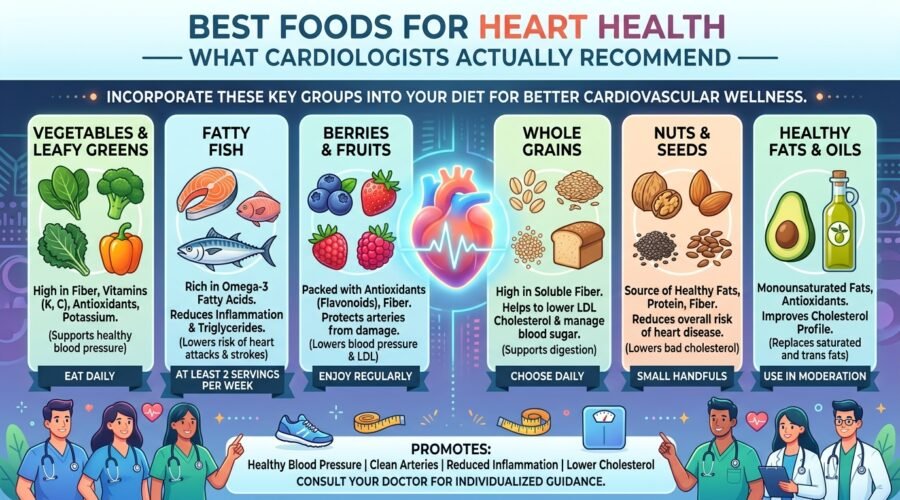
Heart disease is still the number one cause of death globally. But here’s what gives me hope — the best foods for heart health are not exotic, expensive, or hard to find. Most of them are probably already available in your local grocery store. The challenge is knowing which ones actually matter, and why.
Let’s get into it.
Why Diet Is Central to Heart Health
Your heart is a muscle. And like any muscle, what you feed it affects how it performs. Poor diet contributes to high blood pressure, high cholesterol, inflammation, and arterial plaque buildup — all major risk factors for heart disease and stroke.
The American Heart Association (AHA) is very clear: dietary patterns have a direct and measurable impact on cardiovascular risk.
This isn’t about a single “superfood.” It’s about consistent eating patterns over time.
Top Heart-Healthy Foods (Backed by Research)
1. Fatty Fish — Omega-3 Powerhouses
Salmon, mackerel, sardines, and trout are rich in omega-3 fatty acids — specifically EPA and DHA. These fats reduce triglycerides, lower blood pressure slightly, and reduce inflammation in arterial walls.
A comprehensive review published in JAMA Internal Medicine found that higher omega-3 intake was associated with a lower risk of fatal coronary heart disease (Source: JAMA).
The AHA recommends eating fatty fish at least twice a week.
2. Leafy Green Vegetables
Spinach, kale, arugula, and Swiss chard are loaded with vitamin K, nitrates, and antioxidants. Vitamin K supports arterial health by regulating calcium deposits. Dietary nitrates help reduce blood pressure by improving arterial flexibility.
Honestly, if you’re not eating leafy greens regularly, this is the easiest upgrade you can make.
3. Whole Grains
Oats, brown rice, quinoa, barley, and whole wheat reduce LDL (bad) cholesterol and provide sustained energy without blood sugar spikes. The soluble fiber in oats — called beta-glucan — is particularly well-studied for its cholesterol-lowering effects.
A 2022 meta-analysis in the British Medical Journal confirmed that higher whole grain intake was associated with a 29% lower risk of cardiovascular disease (BMJ Source).
4. Berries
Blueberries, strawberries, raspberries, and blackberries are rich in anthocyanins — flavonoids with powerful antioxidant and anti-inflammatory properties. Research consistently links berry consumption to lower blood pressure and improved arterial function.
These are genuinely delicious heart-healthy foods. Adding a handful to your morning yogurt or oatmeal takes 10 seconds.
5. Avocados
Avocados are high in monounsaturated fats — specifically oleic acid, the same fat found in olive oil. They’ve been shown to reduce LDL cholesterol while maintaining or increasing HDL (good) cholesterol.
They’re also rich in potassium, which helps manage blood pressure.
6. Nuts — Especially Walnuts and Almonds
Walnuts are one of the richest plant sources of ALA (alpha-linolenic acid), an omega-3 fatty acid. Almonds provide vitamin E, magnesium, and fiber.
A landmark study — the PREDIMED Trial — found that people who ate a Mediterranean diet supplemented with nuts had a 30% lower risk of major cardiovascular events (NEJM Source).
7. Olive Oil (Extra Virgin)
Extra virgin olive oil is the cornerstone of the Mediterranean diet. It’s rich in polyphenols — compounds with potent anti-inflammatory and antioxidant properties.
Use it for cooking (at medium heat) or as a salad dressing. It’s a genuinely practical swap from butter or refined vegetable oils.
8. Legumes
Beans, lentils, chickpeas, and peas are excellent sources of plant-based protein, fiber, and potassium. They help lower blood pressure, reduce LDL cholesterol, and stabilize blood sugar.
They’re also incredibly affordable, which makes them a particularly practical choice.
9. Dark Chocolate (in Moderation)
Yes, really. Dark chocolate with at least 70% cocoa content contains flavanols that improve endothelial function — the flexibility and health of artery linings. A modest amount (1–2 squares per day) has been associated with lower blood pressure in multiple studies.
This isn’t a license to eat a whole bar daily. But a small amount? Genuinely beneficial.
10. Green Tea
Green tea contains catechins — antioxidants that reduce inflammation, improve cholesterol levels, and support healthy blood vessel function. Regular green tea consumption has been linked to lower rates of cardiovascular disease in large Asian cohort studies.
Foods to Limit for Heart Health
Knowing what to eat is half the battle. The other half is knowing what to reduce:
| Food Category | Why It’s Harmful | Better Alternative |
|---|---|---|
| Trans fats (partially hydrogenated oils) | Raises LDL, lowers HDL | Olive oil, avocado oil |
| Refined carbohydrates | Spikes blood sugar, promotes inflammation | Whole grains |
| Processed meats (bacon, hot dogs) | High sodium, saturated fat, nitrites | Lean poultry, fish |
| Sugary beverages | Promotes obesity, raises triglycerides | Water, unsweetened tea |
| Excess sodium | Raises blood pressure | Herbs and spices for flavor |
The Mediterranean Diet: A Heart-Healthy Blueprint
Rather than focusing on individual foods, the Mediterranean diet as an overall eating pattern has the strongest evidence base for heart health. It emphasizes:
- Plenty of vegetables and fruits
- Whole grains
- Olive oil as the primary fat
- Moderate fish and poultry
- Limited red meat
- Moderate wine (optional — and definitely not a reason to start drinking)
The Mayo Clinic recognizes it as one of the most heart-protective dietary patterns available.
Practical Meal Ideas
You don’t need to overthink this. Here are some simple, heart-friendly meal combinations:
Breakfast: Oatmeal with blueberries, walnuts, and a drizzle of honey
Lunch: Large salad with spinach, salmon, avocado, olive oil dressing, and whole grain bread
Dinner: Baked mackerel with roasted vegetables and quinoa
Snack: A small handful of almonds or a square of dark chocolate
Drink: Green tea or water with lemon
Pros and Cons of a Heart-Healthy Diet
| Pros | Cons |
|---|---|
| Reduces cardiovascular disease risk significantly | Requires planning and meal prep |
| Improves overall energy and mental clarity | Whole foods can be more expensive than processed options |
| Supports weight management | Taste adjustment period if switching from processed foods |
| Benefits other health areas (diabetes, inflammation) | Social situations can make it challenging |
FAQs: Best Foods for Heart Health
Q1: Is red meat completely off-limits for heart health?
Not completely. Lean cuts in moderate amounts are acceptable for most people. The bigger concern is processed red meat (sausages, bacon) — which has stronger links to cardiovascular risk.
Q2: How quickly can dietary changes affect heart health?
Some changes — like blood pressure reduction from reduced sodium — can happen within weeks. Cholesterol improvements typically take 4–8 weeks. Long-term risk reduction takes months to years of consistent eating.
Q3: Are supplements as effective as whole foods for heart health?
Generally no. Whole foods contain complex combinations of nutrients that work synergistically. Fish oil supplements, for example, don’t consistently replicate the benefits of eating actual fish in recent large trials.
Q4: Can heart disease be reversed through diet?
Some research — including work by Dr. Dean Ornish — suggests that intensive dietary changes can reverse arterial plaque. This requires significant commitment and medical supervision. But it does demonstrate the power of food as medicine.
Q5: What’s the worst food for your heart?
Trans fats are arguably the most damaging. They raise LDL cholesterol, lower HDL cholesterol, and promote inflammation all at once. Fortunately, many countries have now banned or significantly restricted artificial trans fats.
Final Thoughts
Heart health isn’t built in a single meal. It’s built over thousands of meals. You don’t have to be perfect — but making more of the right choices, more often, genuinely adds up. Start with one change this week. Maybe swap white bread for whole grain. Add a handful of walnuts. Cook with olive oil instead of butter.
Small changes, consistently applied, create real results.

Emma Sofia is the founder and writer of Insure Judge. She is passionate about explaining insurance topics in a simple and easy way. Her goal is to help readers make smart and confident decisions about insurance through clear, honest, and well-researched content.